
FutureVitals Annual Research Academy
Bringing real research education to students earlier.
The FutureVitals Annual Research Academy was created to introduce students to real scientific research years before most have the opportunity to encounter it in school.
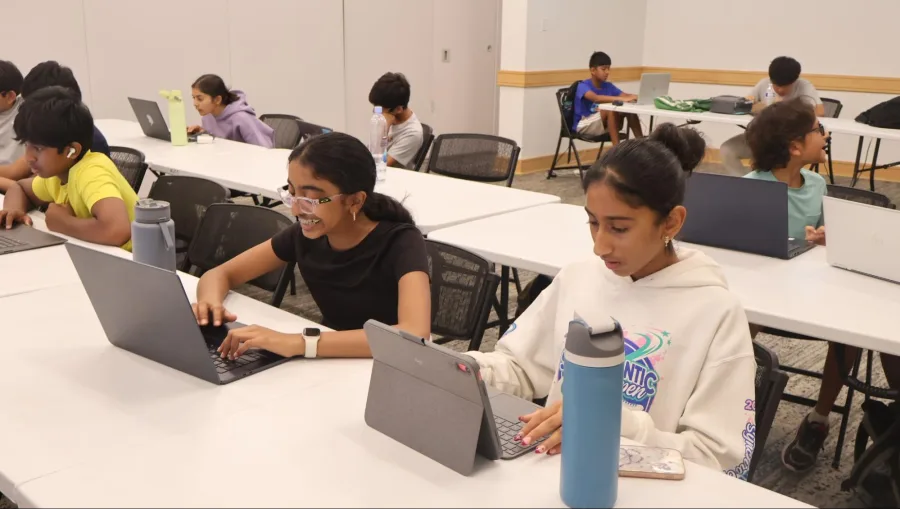
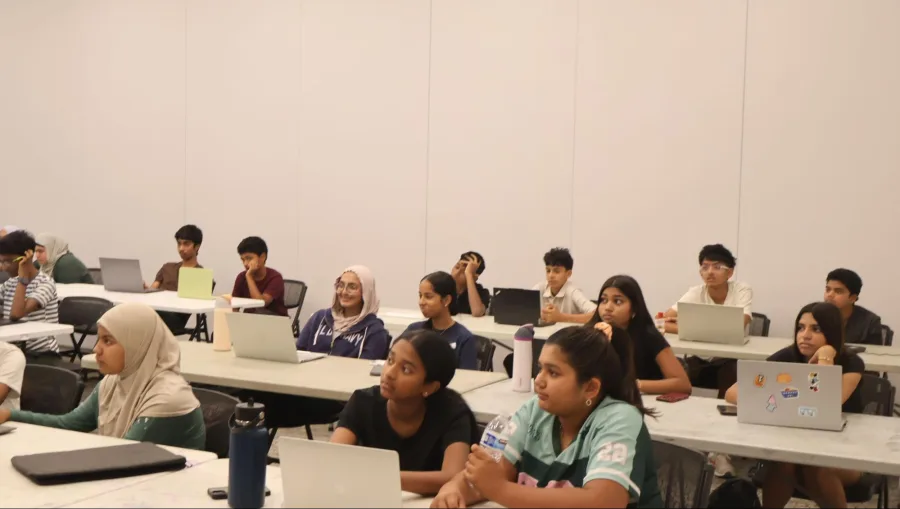
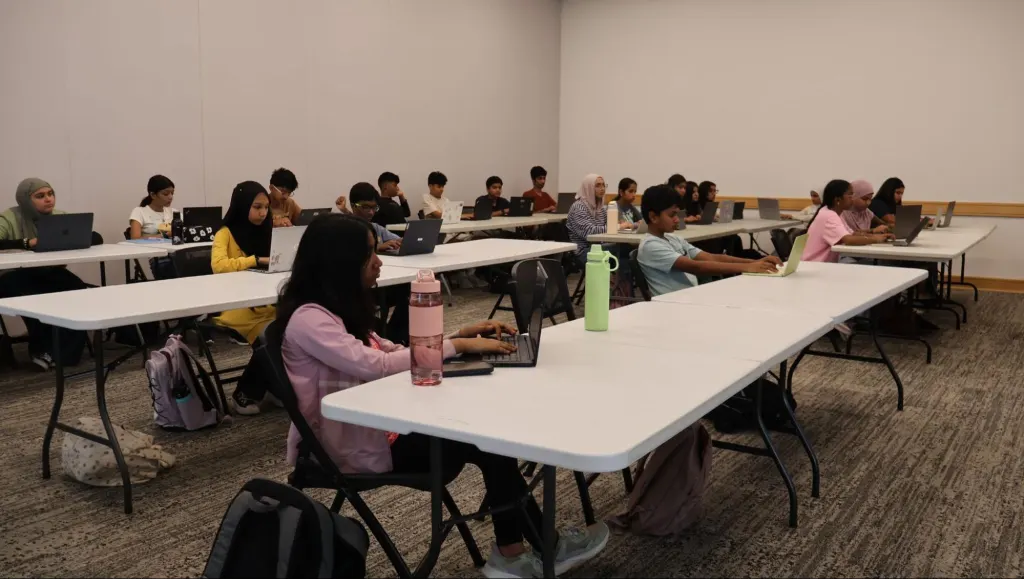
In our inaugural year, 60+ rising 6th–9th graders spent five full days learning how research moves from an initial question to data, analysis, interpretation, and eventually a project they could call their own.
Why We Started the Research Academy
In the Greater Richmond area, students have access to plenty of traditional STEM camps. What we found much harder to find was an accessible program dedicated specifically to teaching young students how research actually works.
Research is not one skill.
It brings together science, statistics, data analysis, writing, visual communication, critical thinking, and public speaking. Students have to know how to ask a strong question, find reliable evidence, interpret results honestly, explain limitations, and communicate complicated ideas clearly.
We built the Research Academy to introduce those skills earlier and give students the opportunity to practice them through work of their own.
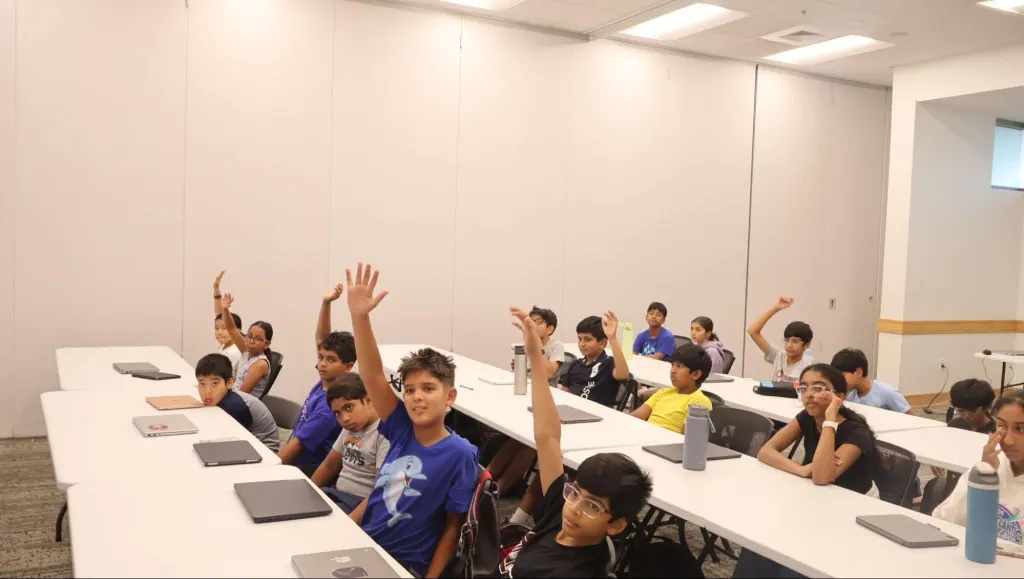
In our first year, 60+ students took that opportunity.
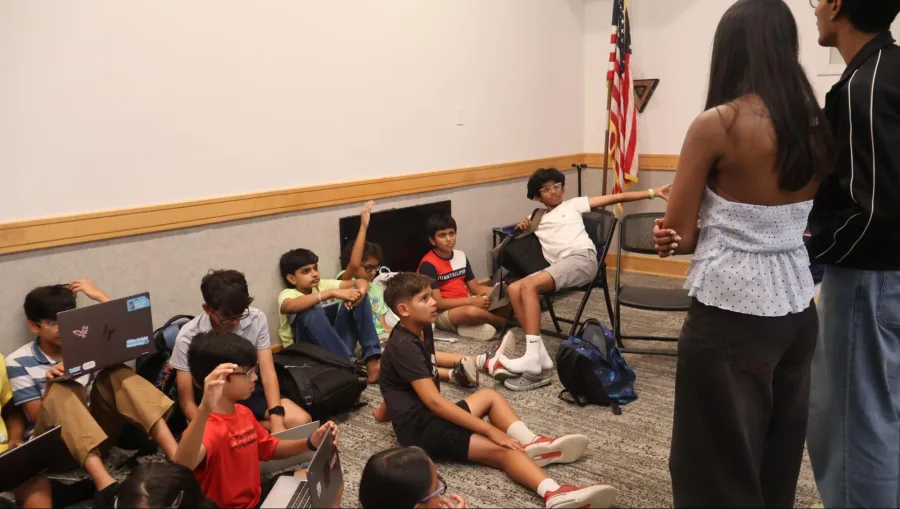
A student mentor working one-on-one with campers during the Research Academy.
The Impact of One Week
For us, the impact wasn't simply getting 60+ students into a room.
It was what they were able to do once they got there.
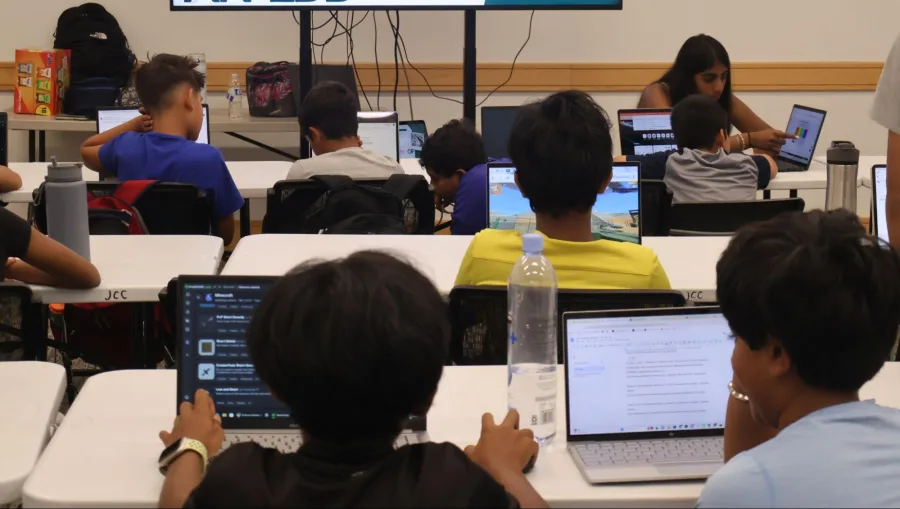
Students who had never analyzed a scientific dataset were cleaning data and building graphs. Students who had never read research literature were learning to evaluate sources. Younger campers were investigating questions of their own, while advanced students were working with computational biology and biological data.
By the end of five days, every camper had moved from learning science to actually using it.
Two Research Tracks
Our younger cohort spent the week learning the complete research process from the ground up.
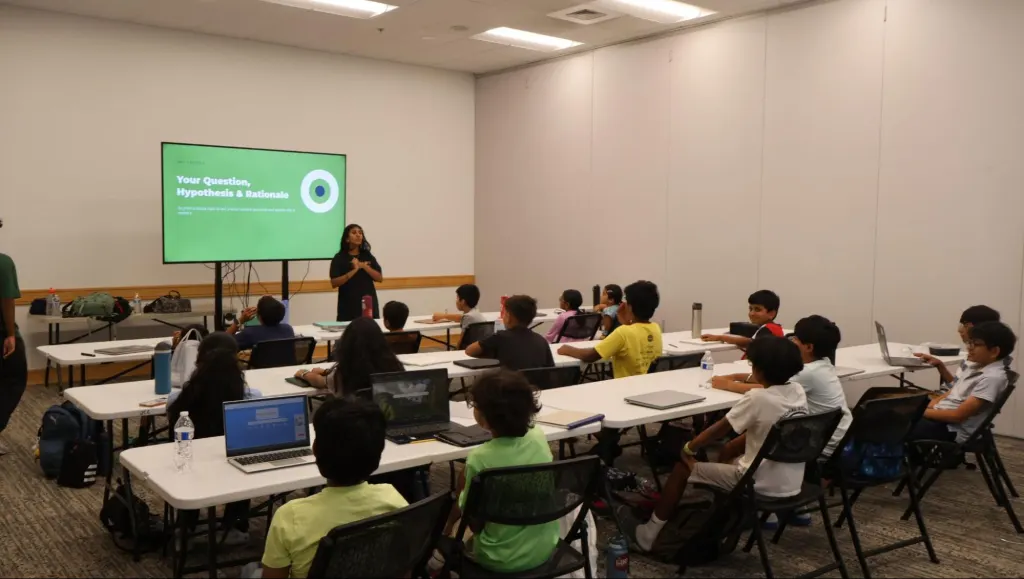
Each student selected a question that interested them, worked with real datasets and scientific sources, and learned how to develop a research question and hypothesis. From there, students learned spreadsheet skills, data cleaning, exploratory analysis, graphing, and how to calculate and interpret results.
Just as importantly, they learned to question their own findings. Students discussed confounding variables, limitations, correlation, and why researchers have to be careful about what their results actually allow them to conclude.
For students as young as rising sixth graders, the goal was ambitious. By the end of the week, they weren't completing a predetermined classroom experiment. They had taken a question of their own through an entire research process.
The advanced cohort moved into computational and biomedical research, working with concepts and tools that students typically encounter much later in their education.
Students explored real biological data and questions involving gene expression, disease-associated mutations, protein structure, drug interactions, disease patterns, statistics, and computational biology.
The emphasis wasn't simply on getting an answer. Students learned to ask what biological mechanism could explain a result, what evidence supported their interpretation, what limitations existed, and what further research would be needed to test their conclusions.
Advanced students also developed scientific writing around their projects, giving them experience communicating their methods and findings in a research format.
In just five days, students were being introduced to the same broader ideas shaping modern biomedical research, where biology increasingly intersects with data, computation, statistics, and modeling.
Inside the Week
-
Monday
Research Questions & Scientific Literature
Students learned what makes a strong research question, selected topics, found credible sources and datasets, and developed hypotheses.
-
Tuesday
Research Methods & Data Analysis
Students cleaned data, worked with spreadsheets, created graphs, and began calculating results.
-
Wednesday
Interpretation & Scientific Communication
Students analyzed what their results actually showed, considered limitations, and began developing their research posters.
-
Thursday
Presentation & Project Refinement
Students refined their work, practiced explaining their research, and prepared to answer questions about their methods and conclusions.
-
Friday
Research Symposium
Students completed the week by presenting the projects they had spent five days developing.
Keeping Research Accessible
Five full days for $70.
A meaningful research opportunity shouldn't be reserved for families able to pay hundreds or thousands of dollars for a summer program.
FutureVitals heavily subsidized our inaugural Research Academy, bringing tuition to just $70 for approximately 35 hours of in-person programming.
That meant students received five days of research instruction, mentorship, project development, data analysis, scientific communication, and symposium preparation for approximately $2 per program hour.
And when cost itself presents a barrier, families are encouraged to reach out. Our priority is getting interested students into the room.
$70.35 Hours.Real Research.
Built With Research Experience
Our student mentors have experience competing and earning recognition through VJAS and Metro, and the Academy was designed with those research environments in mind.
Students learned not only how to complete a project, but how to explain their methodology, recognize weaknesses in their own conclusions, respond to questions, and communicate their work clearly.
What 60+ Students Proved
Our first Research Academy began with a gap we saw in our own community.
It ended with 60+ young people having completed an experience in scientific research before many had even entered high school.
They analyzed data. They read scientific literature. They questioned their results. They learned computational tools. They communicated their findings. Most importantly, they experienced what it feels like to take ownership of a scientific question.
That's the impact we want the Research Academy to continue building each year.