
Cancer Biology Research Fellowship
Understanding the science behind one of medicine’s greatest challenges.
About the program
The FutureVitals Cancer Biology Program is a 20-week virtual biomedical program for students in Grades 6 to 10. Students begin with the foundations of cancer biology and progress into genetics, tumor development, modern treatments, immunotherapy, precision medicine, and emerging research.
The second half of the program shifts from learning to application, with students developing an independent capstone research project using the skills they build throughout the course.
20 weeks · Grades 6 to 10 · International · Independent capstone
- Duration
- 20 weeks
- Dates
- July to December 2026
- Format
- Virtual, international
- Grades
- 6 to 10
- Capstone
- Independent research project
- Certificate
- Awarded on completion
What students explore
Students move from understanding how cancer begins to exploring how scientists study and treat it, before applying what they learn to research of their own.
- 01
Understand
Cells → DNA → Mutations → Tumor development
Students begin with the biology behind normal cell growth and what changes when cancer develops.
- 02
Investigate
Cancer types → Risk → Prevention → Laboratory research
Students connect cellular biology to real cancers and explore how researchers investigate disease.
- 03
Treat
Modern therapies → Immunotherapy → Precision medicine
The program moves into how cancer is treated and why different cancers and patients may require different approaches.
- 04
Look forward
AI → Emerging technologies → Cancer research
Students explore where oncology is heading and how new tools are changing research and treatment.
- 05
Create
Research question → Investigation → Capstone
The second half shifts from learning about research to developing a project of their own.
Not simply listening to lectures
Sessions combine live teaching, discussions, activities, games, scientific literature, and examples from real cancer research to make advanced concepts approachable while keeping the science at the center.
Every workshop this cohort has run
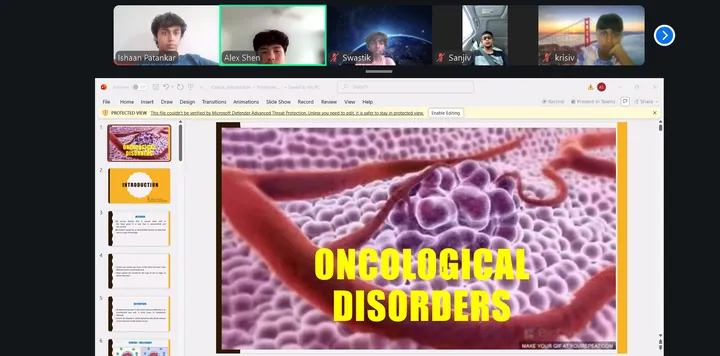
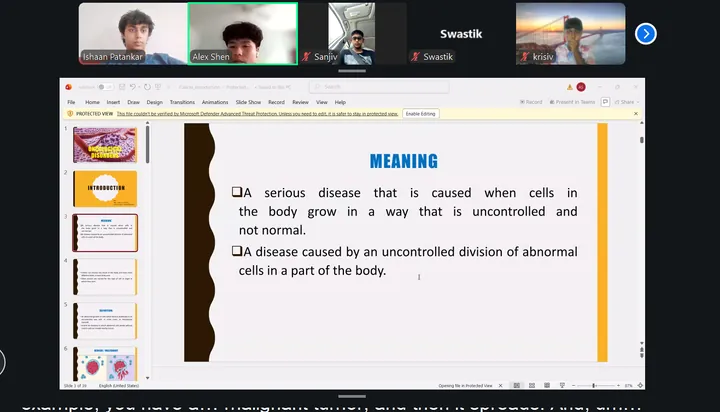
- 18 July 2026 Introduction to cancer, and why it matters The fundamentals of cancer biology, why cancer remains one of the world’s leading health challenges, and how scientists are working toward more effective treatments.
- 25 July 2026 How cancer begins Cells, DNA and mutations. How healthy cells function, and how mutations disrupt normal growth and contribute to tumor formation.
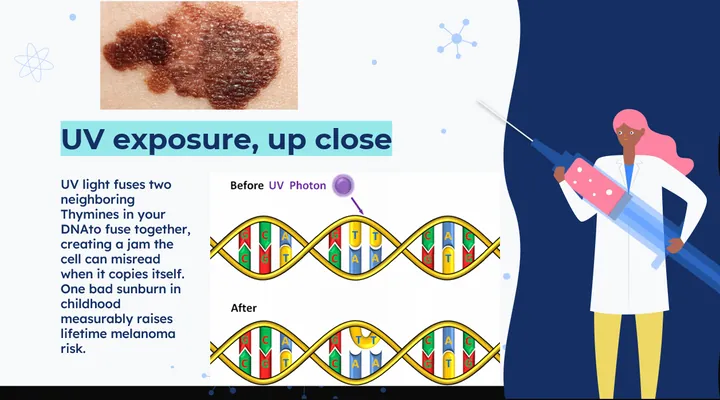
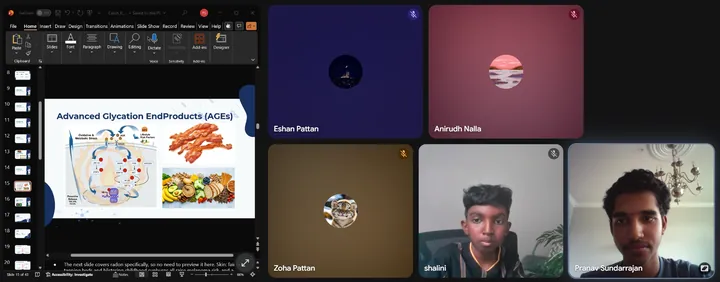
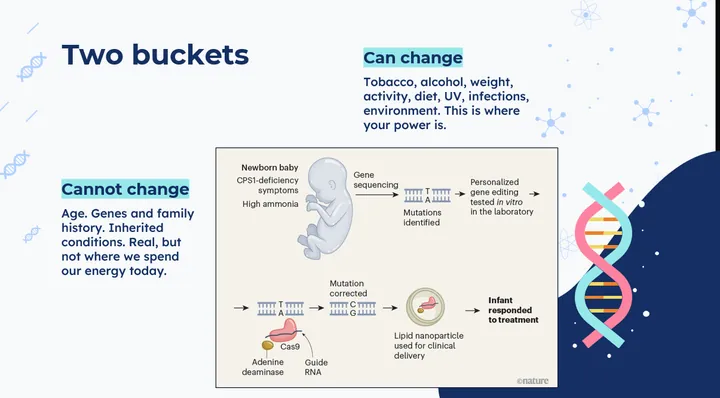
- 1 August 2026 Types of cancer and risk factors The diversity of cancer, and the environmental, genetic and lifestyle factors that influence risk, prevention and early detection.
20 weeks. Two parts.
Learn the science
Cancer biology, genetics, disease mechanisms, treatments, precision medicine, immunotherapy, prevention, and emerging research.
Currently underwayBuild the research
Students transition into independent research, developing a question, investigating scientific evidence, analyzing their findings, and communicating their work.
Coming nextTaking what they learn further
The second half of the program gives students the opportunity to turn knowledge into work of their own.
With guided support, participants will develop an independent capstone research project, learning how to investigate a scientific question, work with evidence, and communicate their findings.
- Question
- Research
- Analysis
- Communication
The capstone phase begins later in the 2026 program.
Connecting biology to real research.
Learning now. Independent research ahead.
July to December 2026